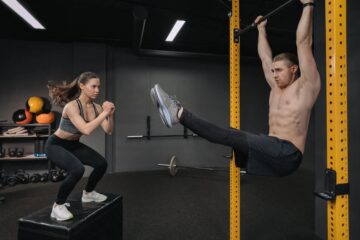
How Singapore Gym Trainers Design Programmes Around Variability Conditioning
Most gym members think about training in relatively fixed terms. A programme has exercises, sets, reps, and rest periods. Progress means adding weight or reducing rest. This linear model produces results in early training phases, but it eventually encounters a fundamental limitation: the body adapts to predictable stimuli and stops responding to them. The plateau that frustrates so many long-term gym members is often not a failure of effort but a failure of stimulus variety.
Variability conditioning is the deliberate, structured use of training variation to prevent accommodation and drive continued adaptation across extended training cycles. Singapore’s most experienced gym trainer Singapore professionals apply this principle systematically, and the members who train under variability-informed programming consistently outlast and outperform those working under rigid, predictable protocols.
What Variability Conditioning Actually Means
Variability conditioning is not random programme changes for the sake of novelty. That approach, sometimes called muscle confusion in popular fitness culture, lacks the systematic progression that produces genuine adaptation. True variability conditioning involves deliberate manipulation of specific training variables within a structured framework that maintains progressive overload while preventing accommodation to any single stimulus pattern.
The variables that experienced trainers manipulate include:
Loading parameters: Changing the relationship between intensity, meaning percentage of maximum effort, and volume, meaning total sets and repetitions, across training blocks. A strength-focused block using heavy loads and low repetitions is followed by a hypertrophy block using moderate loads and higher repetitions, followed by a power-focused block using lighter loads and maximal velocity. Each block develops a different quality while the underlying fitness base continues to grow.
Movement pattern variation: Rotating between exercises that address the same fundamental movement pattern differently. A bilateral back squat becomes a Bulgarian split squat becomes a step-up with knee drive, each loading the same primary musculature through a different mechanical environment that stresses stabilising and accessory muscles differently.
Energy system emphasis: Alternating between training sessions that prioritise the phosphocreatine system through short maximal efforts, the glycolytic system through medium-duration high-intensity work, and the oxidative system through longer, sustained aerobic efforts. Each system adapts specifically to the stimulus it receives, and rotating emphasis develops all three.
Tempo and time under tension: Manipulating the speed of movement across training phases. Slow eccentric phases develop different muscular qualities than explosive concentric work. Isometric pauses at vulnerable positions develop joint stability that neither fast nor slow dynamic movement specifically targets.
Why the Body Accommodates to Fixed Stimuli
The SAID principle, Specific Adaptation to Imposed Demands, is the foundational concept explaining why variability conditioning is necessary. The body adapts precisely to the demands placed upon it, and once those adaptations are sufficient to meet the demand without further physiological stress, adaptation stops.
A member who has been performing three sets of 10 repetitions on the bench press with the same weight for 12 consecutive weeks has given their body the same demand repeatedly. The early adaptations, neuromuscular efficiency improvements and some hypertrophy, occurred in the first four to six weeks. The subsequent weeks have produced progressively less adaptation because the demand has not changed.
Introducing a new stimulus, whether through load, volume, tempo, angle of force, or movement pattern, restores the gap between current capacity and demand and restarts the adaptation process.
Practical Variability Conditioning Frameworks
Singapore gym trainers implement variability conditioning through several practical programming frameworks.
Block periodisation divides the training year into distinct phases of three to six weeks each, with each block targeting a specific quality and using loading parameters appropriate to that quality. The blocks cycle through accumulation phases, intensification phases, and realisation phases in a sequence that develops qualities progressively and allows each block to build on the adaptations of the previous one.
Daily undulating periodisation applies variability within a single week rather than across multi-week blocks. Each training session within the week targets a different quality: Monday’s session uses strength parameters, Wednesday’s uses hypertrophy parameters, and Friday’s uses power or endurance parameters. This approach produces simultaneous development of multiple qualities and suits members who respond well to within-week variety.
Exercise rotation cycles systematically rotate the primary exercises used for each movement pattern on a four to eight week cycle. The primary movement pattern, such as the horizontal push, remains constant across cycles, but the specific exercise used to train it changes. This maintains the developmental focus while preventing the neurological accommodation that prolonged use of a single exercise produces.
FAQ
How do I know if my current programme lacks sufficient variability?
The clearest signal is performance plateau: if your key performance metrics, loads lifted, times recorded, or body composition measured by InBody, have not improved meaningfully across two consecutive training blocks, the stimulus is likely insufficient or too familiar. A secondary signal is boredom and reduced motivation during sessions that are too predictable to create mental engagement.
Is variability conditioning appropriate for beginners?
Beginners produce strong adaptations from relatively simple, consistent stimuli and do not require the same degree of variability as intermediate and advanced members. However, introducing moderate variation in exercise selection within movement patterns from the beginning prevents the over-reliance on a single exercise that creates muscular imbalances and accommodation risks later.
Can I design my own variability conditioning programme or do I need a trainer?
The underlying principles are accessible and learnable. However, applying variability conditioning well requires a thorough understanding of how different loading parameters interact, which variables to manipulate in which sequence, and how to maintain progressive overload across blocks with different emphases. Most members benefit significantly from initial trainer-guided programme design even if they subsequently manage independent training within the framework.
How does variability conditioning interact with injury management?
Thoughtfully applied variability conditioning is an injury prevention tool as well as a performance development one. Rotating through different exercises and loading parameters reduces the cumulative tissue stress that repetitive fixed-pattern training creates. Members managing chronic injuries often find that moving away from the exercises that have caused overuse stress toward alternative movement patterns provides relief while maintaining training continuity.
The training programme design at TFX Singapore incorporates structured variability across loading parameters, exercise selection, and energy system emphasis, ensuring that members continue to adapt and progress well past the point where fixed-protocol training typically stalls.